



Product Description
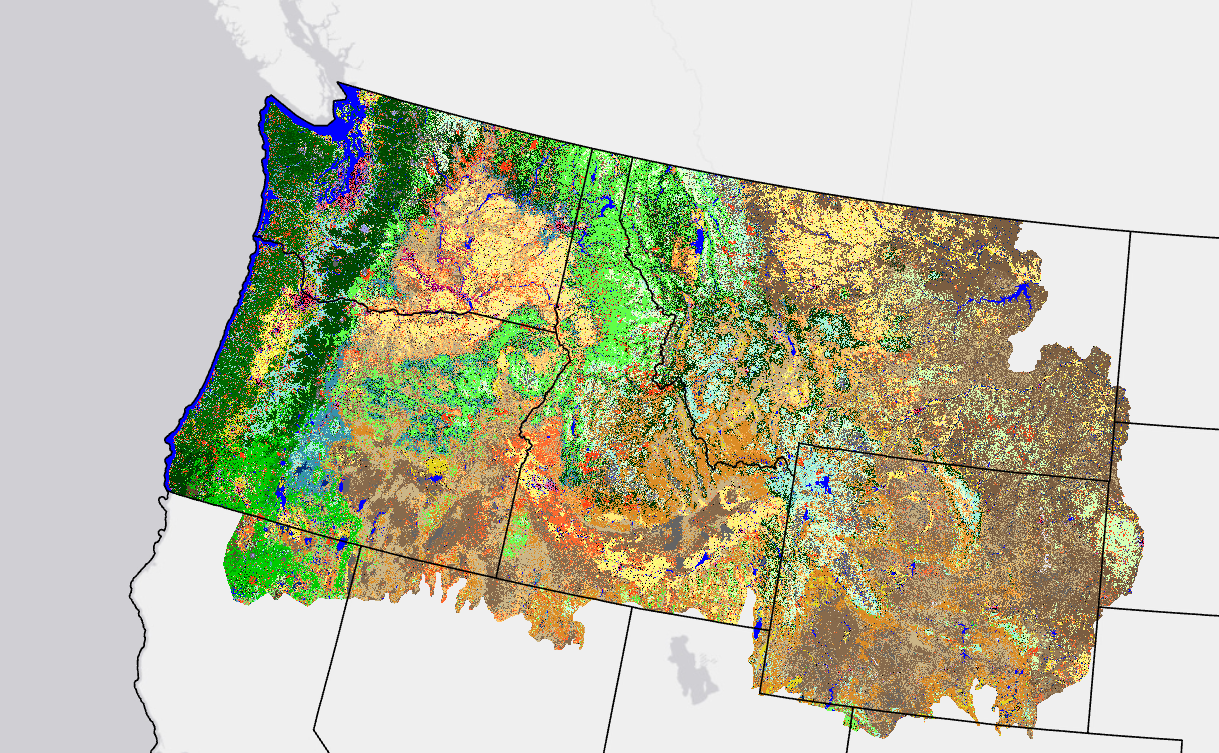 LANDFIRE's (LF) Existing Vegetation Type National Vegetation Classification (EVT-NVC), an existing vegetation layer created with a new mapping process and delivered as a separate spatial data layer for the first time with LF 2016 Remap, represents the current distribution of vegetation groups within the U.S. National Vegetation Classification circa 2016. These groups are defined as combinations of relatively narrow sets of diagnostic plant species, including dominants and co-dominants, broadly similar composition, and diagnostic growth forms. LF Remap used U.S. EVT-NVC 2.0 to map LF EVT-NVC.
- The LF Natural EVT-NVC Groups Descriptions for Western US and LF Natural EVT-NVC Groups Descriptions for Eastern US provides descriptions for each natural EVT-NVC Group including species, distribution, and classification information.
The LF EVT-NVC product also includes ruderal or semi-natural vegetation types. The LF Ruderal EVT-NVC Groups Descriptions for CONUS provides descriptions for each ruderal EVT-NVC Group including species, distribution, and classification information.
EVT-NVC groups were initially mapped using decision tree models informed by field reference data, Landsat imagery, elevation/topographic, and biophysical gradient inputs.
- Decision tree models were developed separately for each life-form including tree, shrub, herbaceous, and sparse vegetation.
- Disturbance products were included in LF Remap products to describe areas on the landscape that have experienced change within the previous 10-year period.
- LF EVT-NVC was reconciled through QA/QC measures to ensure lifeform is synchronized with both Existing Vegetation Cover and Existing Vegetation Height.
- When modeled results were poor for modeled EVT-NVC classes, rectification and/or cross-walking from existing ancillary datasets or Ecological Systems was performed to improve the quality of the product.
LF 2016 Remap for Alaska (AK) includes a 90-kilometer buffer along the 1,500 miles of the eastern and southern borders AK shares with Canada.
LF Remap Auto-Keys: Learn about the redesign of the Auto-Keys process, which is used to determine existing vegetation type classification based on plot data in the LFRDB — Developing Auto-Keys for LF Vegetation Mapping: 2014-2015 CONUS Project Report.
LF uses an assessment process that compares the EVT product for a pixel with the Auto-Key EVT assignment for a sample plot contained in that pixel. EVT-NVC is part of the assessment. Agreement assessments have been developed for each LF Remap CONUS GeoArea
National Vegetation Classification Resources
| Key EVT-NVC Attributes | |
|---|---|
| VALUE | National Vegetation Classification, not Ecological System |
| NVC_NAME | Class name in the LANDFIRE NVC legend |
| LFRDB | Code stored in the LFRDB |
| LF_LIFEFORM_PRIMARY | Primary lifeform |
| NVC_CLASS | Class code in the USNVC Vegetation hierarchy |
| NVC_SUBCLASS | Subclass code in the USNVC Vegetation hierarchy |
| NVC_FORMATION | Formation code in the USNVC Vegetation hierarchy |
| NVC_DIVISION | Division code in the USNVC Vegetation hierarchy |
| CLASS | Class name in the USNVC Vegetation hierarchy |
| SUBCLASS | Subclass name in the USNVC Vegetation hierarchy |
| FORMATION | Formation name in the USNVC Vegetation hierarchy |
| DIVISION_CODE | Division code in the USNVC Vegetation database |
| DIVISION | Division name in the USNVC Vegetation hierarchy |
| MACROGROUP_CODE | Macrogroup code in the USNVC Vegetation hierarchy |
| MACROGROUP | Macrogroup name in the USNVC Vegetation hierarchy |
| GROUP_CODE | Group code in the USNVC Vegetation database |
| GROUP | Group name in the USNVC Vegetation hierarchy |
| Key EVT-NVC Attributes | |
|---|---|
| VALUE | National Vegetation Classification, not Ecological System |
| NVC_NAME | Class name in the LANDFIRE NVC legend |
| LFRDB | Code stored in the LFRDB |
| LF_LIFEFORM_PRIMARY | Primary lifeform |
| NVC_CLASS | Class code in the USNVC Vegetation hierarchy |
| NVC_SUBCLASS | Subclass code in the USNVC Vegetation hierarchy |
| NVC_FORMATION | Formation code in the USNVC Vegetation hierarchy |
| NVC_DIVISION | Division code in the USNVC Vegetation hierarchy |
| CLASS | Class name in the USNVC Vegetation hierarchy |
| SUBCLASS | Subclass name in the USNVC Vegetation hierarchy |
| FORMATION | Formation name in the USNVC Vegetation hierarchy |
| DIVISION_CODE | Division code in the USNVC Vegetation database |
| DIVISION | Division name in the USNVC Vegetation hierarchy |
| MACROGROUP_CODE | Macrogroup code in the USNVC Vegetation hierarchy |
| MACROGROUP | Macrogroup name in the USNVC Vegetation hierarchy |
| GROUP_CODE | Group code in the USNVC Vegetation database |
| GROUP | Group name in the USNVC Vegetation hierarchy |
LF Definitions, Quality, and Standards - provides information about contributors, metadata and data standards, data creation, and data testing. This document also provides details about our general data release process.
LF Dictionary - a “one-stop shop” general resource that provides information about products, Attribute Data Dictionaries (ADDs), data and metadata, and terms.
LF Version Comparison Table - view the version history for each individual product.
LF Naming Conventions - understanding the version number
LF Definitions, Quality, and Standards - provides information about contributors, metadata and data standards, data creation, and data testing. This document also provides details about our general data release process.
LF Dictionary - a “one-stop shop” general resource that provides information about products, Attribute Data Dictionaries (ADDs), data and metadata, and terms.
LF Version Comparison Table - view the version history for each individual product.
LF Naming Conventions - understanding the version number